A well-seasoned cast iron pan is the difference between a sticky surface and a naturally release-friendly one. Seasoning protects the iron from rust and builds up with every good wash-and-oil routine.
This sample guide covers what seasoning actually is, a simple five-step seasoning routine, and the daily care habits that keep a cast iron pan working for years. All copy and images are placeholders for the template demonstration.
What is seasoning?
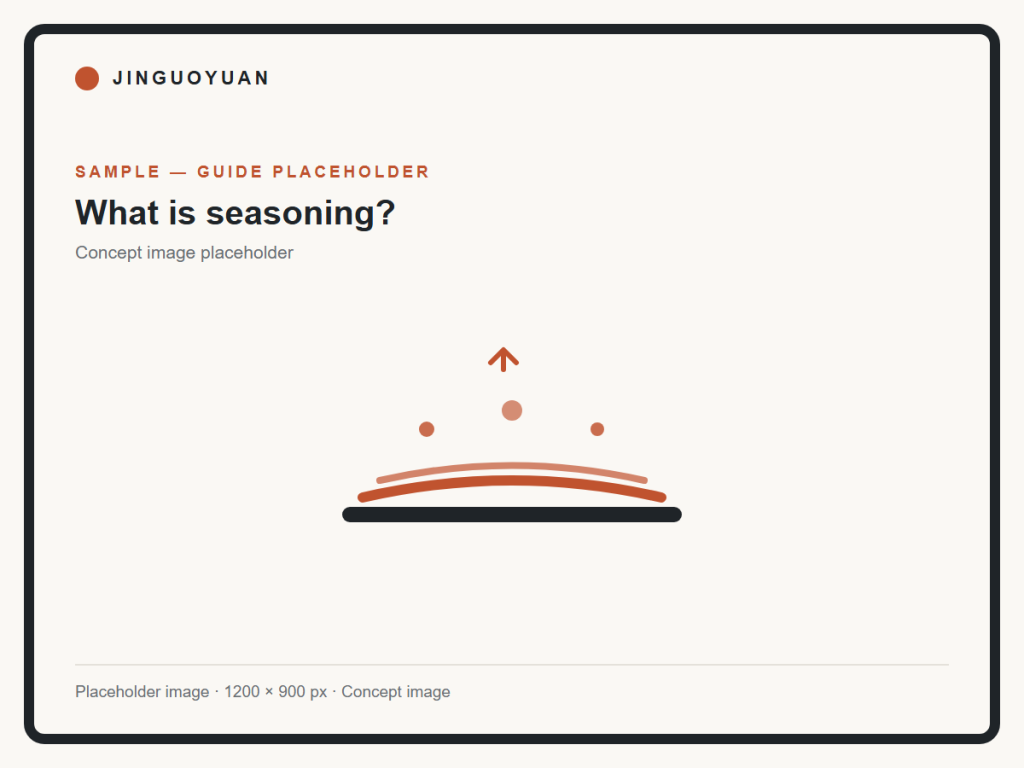
Seasoning is not a spice or a coating that washes off. It is a thin layer of oil that polymerizes — bonds and hardens — on the iron surface when heated. This layer fills the tiny pores of the cast iron, protects it from rust, and gives the pan its naturally release-friendly surface.
How to season your pan
Five steps, repeated when the surface looks dull or food starts to stick (sample).
Step 1 — Wash and dry the pan
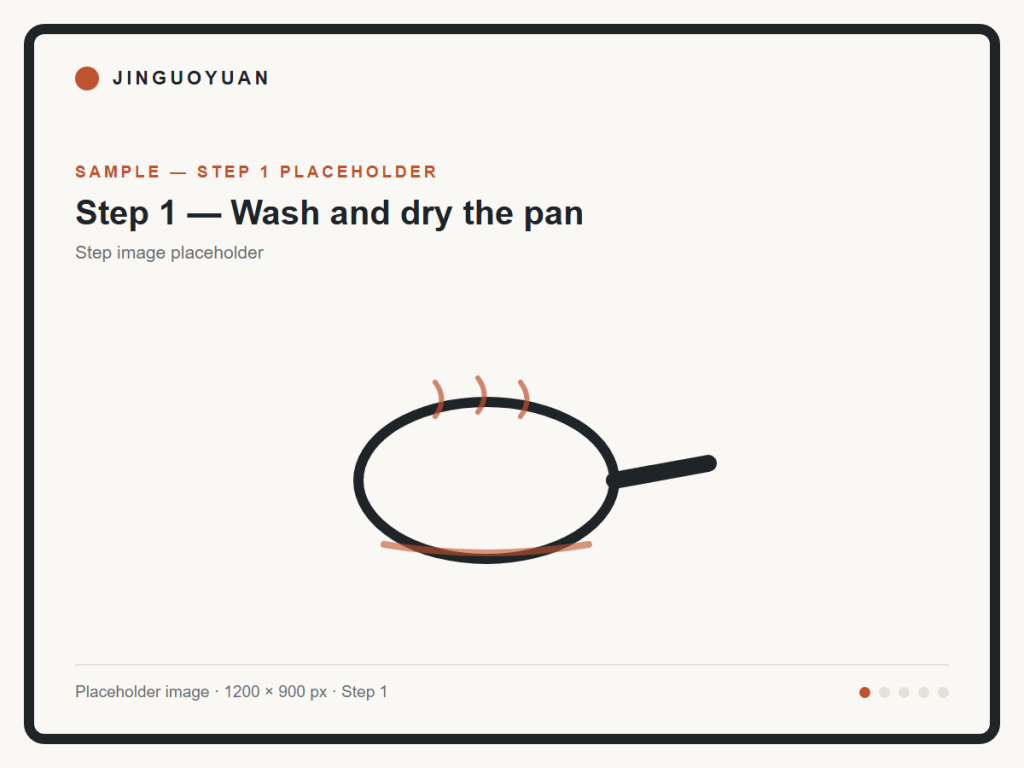
Wash with warm water and a stiff brush, then dry immediately with a towel. A completely dry pan is the first step to a rust-free pan (sample).
Step 2 — Apply a thin layer of oil
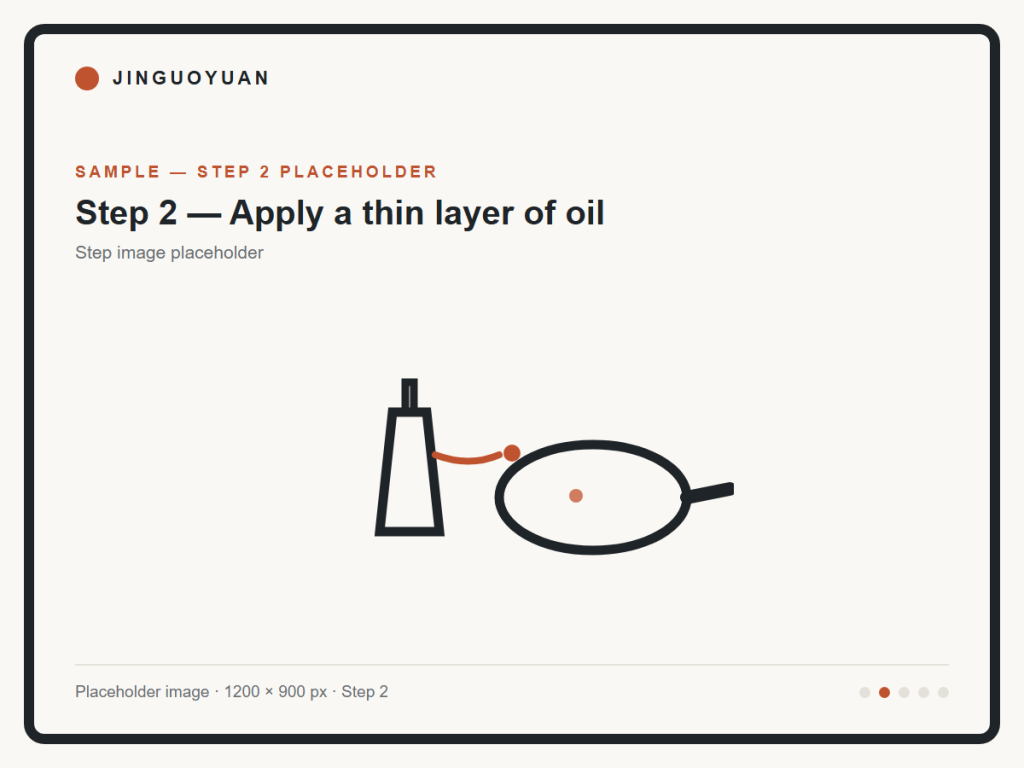
Rub a very thin layer of neutral cooking oil over the entire cooking surface with a paper towel. There should be no pooling oil (sample).
Step 3 — Heat the pan
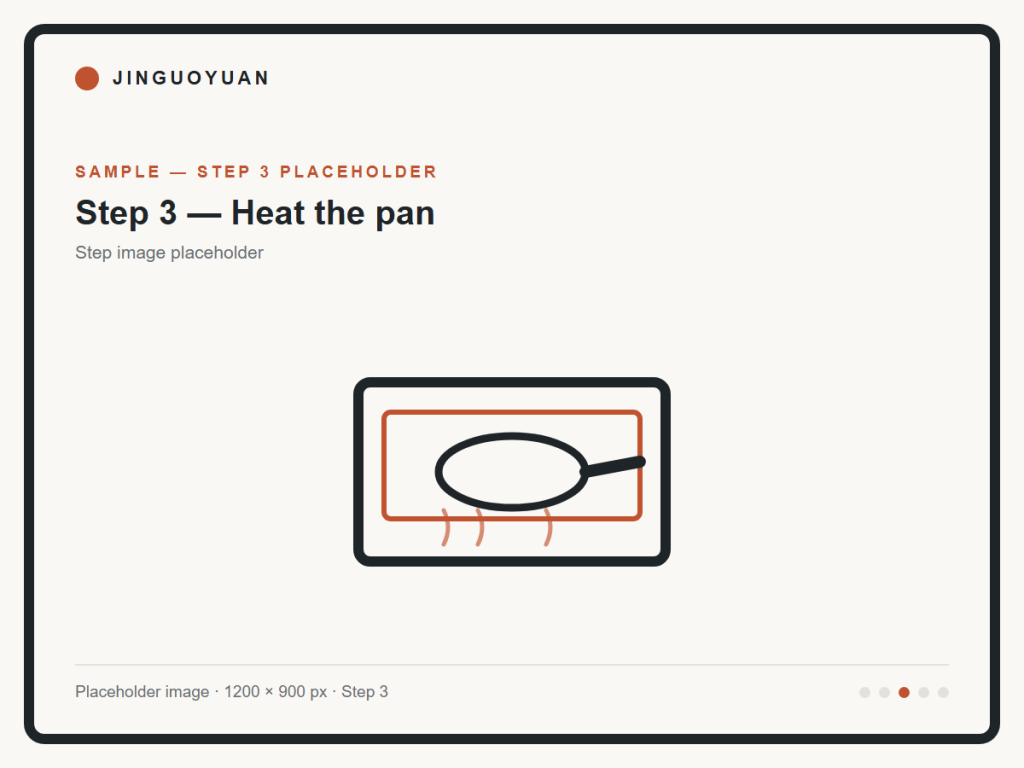
Place the pan upside down in a 230°C / 450°F oven for about an hour, or heat it on the stovetop until the oil stops smoking (sample).
Step 4 — Cool and wipe off excess
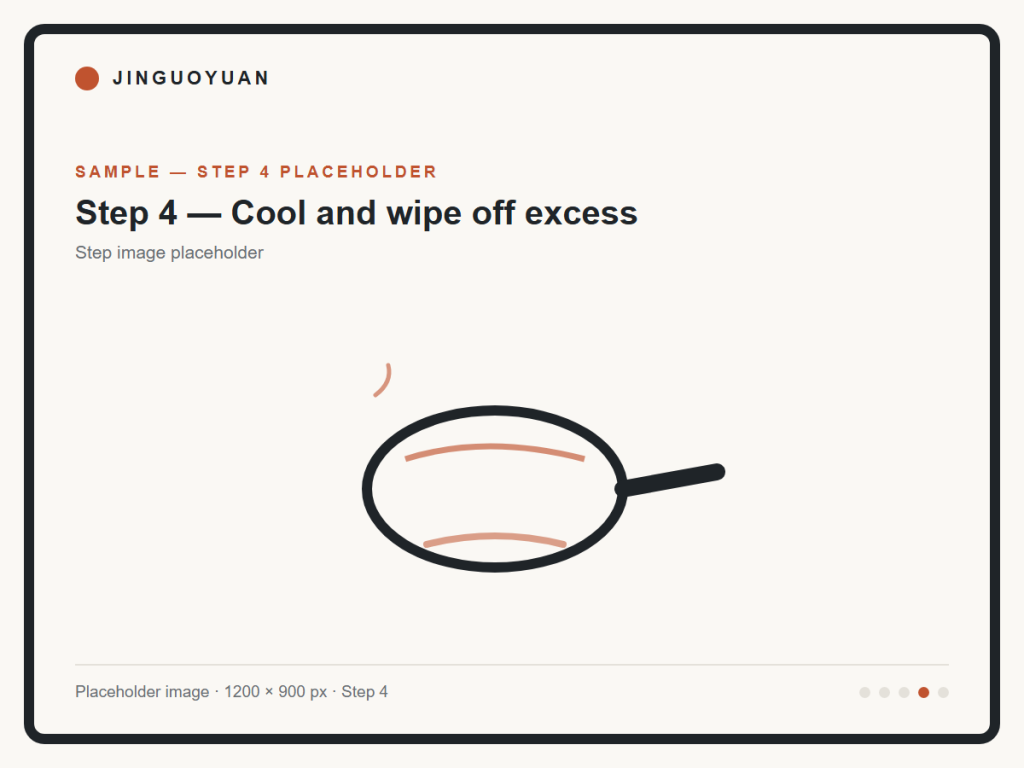
Turn off the heat and let the pan cool completely. Wipe away any excess oil with a clean cloth (sample).
Step 5 — Repeat for a stronger layer
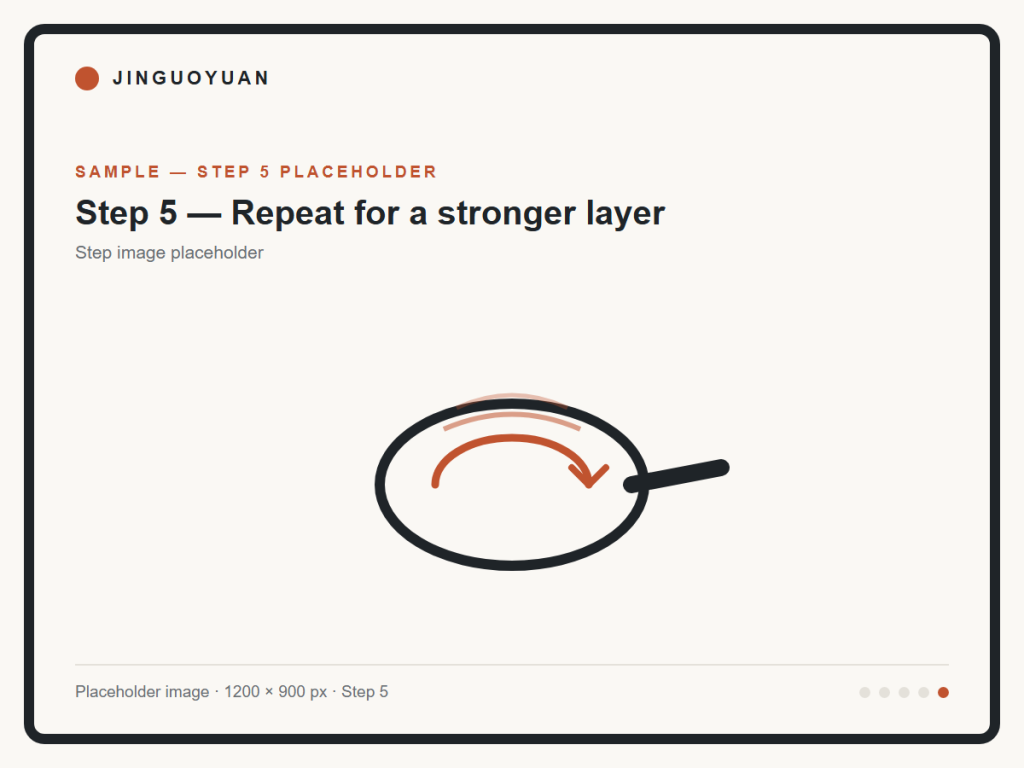
Repeat the thin oil and heat cycle two or three times for a stronger, more even seasoning layer (sample).
Daily cleaning & care
- Wash with warm water and a stiff brush; a small amount of mild soap is fine when needed (sample).
- Dry immediately and thoroughly with a towel, then warm the pan briefly to remove moisture.
- Apply a thin layer of oil while the pan is still slightly warm.
- Avoid soaking, dishwasher cleaning and harsh abrasive cleaners.
- Re-season when the surface looks dull or food begins to stick.
Common questions
Can I use soap on cast iron?
Yes, a small amount of mild soap is fine for a well-seasoned pan. Avoid harsh detergents and long soaking (sample).
What if my pan rusts?
Scrub off the rust with steel wool, wash and dry thoroughly, then apply a thin layer of oil and re-season (sample).
Why is my pan sticky?
Too much oil or too little heat can leave a sticky residue. Scrub lightly, apply a thinner layer, and heat the pan longer (sample).
Can I cook acidic foods?
Occasional use is fine, but long simmers with acidic foods can dull the seasoning. Re-oil afterward (sample).
How often should I season?
Season when the surface looks dull or food begins to stick; daily cooking with a thin oil layer often maintains it (sample).
More questions? See our FAQ.
This is a sample guide for template demonstration. Copy and images are placeholders.